
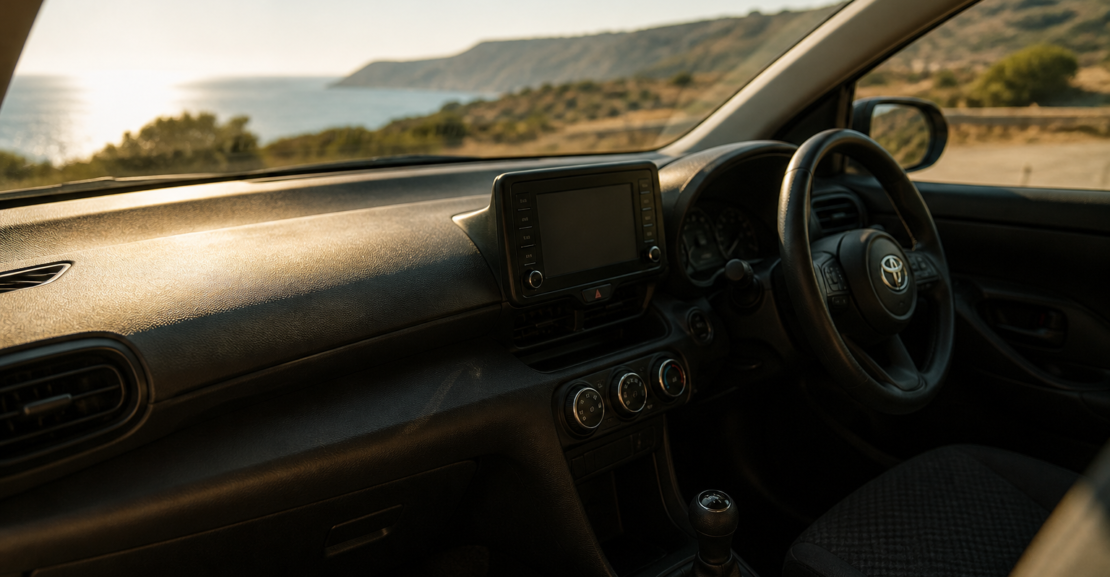
Walk through any car park in Nicosia in August and you’ll see it. Cars sitting in full sun since morning, dashboards baking behind the glass, steering wheels too hot to hold. Most people worry about the paint. The real damage is happening inside.
The outside of a car is built to take the sun. The clear coat on the paint is made for it. The inside isn’t. And in Cyprus, where the car sits in direct heat for five straight months, the inside ages a lot faster than most people realise.
What actually breaks down
The dashboard is usually first. Plastic and vinyl dry out under constant UV and heat, and once they dry out they crack. You’ll see it start as a dull, faded look on the top of the dash — the part that catches the most sun — and then small lines appear. Once it cracks, there’s no fixing it properly. You’re replacing the whole panel or living with it.
Seats go next. Fabric fades and goes thin where the sun hits it, usually the driver’s side and the top of the back seats near the rear window. Leather is worse — it dries, hardens, and cracks the same way the dashboard does.
Then there’s the trim. The plastic around the doors and the gear stick loses its colour and goes grey and chalky. Small things, but together they make a car look tired and old, even one that drives perfectly.
Why this costs you when you sell
Here’s the part people miss. When someone comes to look at a used car, they open the door and sit in it before they even turn the key. A cracked dash and faded seats tell them the car had a hard life, whether that’s true or not.
It plants a doubt. If the inside looks neglected, the buyer starts wondering what else was neglected. That doubt comes straight off the price, or it walks the buyer away completely. Two identical cars, same km, same service history — the one with the clean interior sells faster and for more. Every time.
The cheap habit that stops it
None of this needs money. It needs a few small habits.
Park in the shade whenever you can. Under a tree, in a covered spot, on the side of the street the sun leaves first. It sounds obvious but it’s the single biggest thing you can do.
Use a windscreen sunshade. The folding kind costs a few euro and it’s the best few euro you’ll spend on the car. It keeps the dashboard out of direct sun and drops the cabin temperature a lot, which protects everything else too.
Wipe the dash down and treat it a couple of times a year with a proper protectant — not the shiny spray that makes it look wet, but a matt one that puts moisture back into the plastic. Same idea for leather seats: clean and condition them before summer, not after the damage is done.
Crack the windows a finger’s width when you park in the heat, so the cabin isn’t sitting at oven temperature all day.
None of this is hard. It’s ten minutes a few times a year and a habit of looking for shade. The person who does it hands over a car that looks after itself. The person who doesn’t hands over a cracked dash and a lower price, and wonders where it all went.
The sun in Cyprus is going to do what it does. The only question is whether it’s working on your car or you’re working against it.